Consejos para profesionales sanitarios que pasan horas de pie
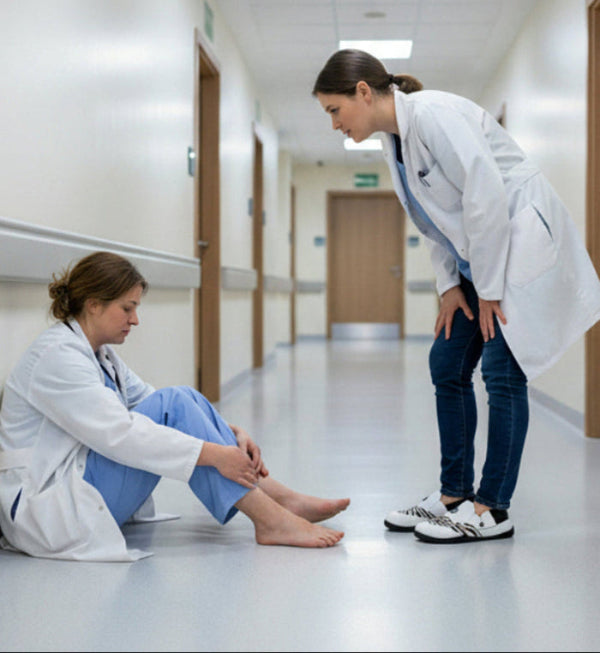
Sentir cansancio en los pies al final del turno no es una excepción en sanidad: para muchos profesionales forma parte de la rutina. Horas de pie, desplazamientos constantes, cambios de ritmo y pocas pausas terminan generando fatiga que no se queda solo en los pies: también afecta a tobillos, rodillas, espalda y postura.
Aunque no siempre es posible reducir el tiempo de actividad, sí hay pequeños hábitos que pueden ayudar a que el cuerpo llegue mejor al final de la jornada.
Moverse en lugar de permanecer completamente inmóvil cuando se está de pie durante mucho tiempo ayuda a repartir cargas. Cambiar el apoyo entre ambos pies, evitar bloquear las rodillas y aprovechar pequeños momentos para movilizar tobillos y estirar gemelos puede reducir la sensación de tensión acumulada.
Otro aspecto clave es el calzado. Cuando el pie pasa muchas horas comprimido o limitado en su movimiento natural, el cuerpo busca compensaciones que pueden traducirse en incomodidad y fatiga.
En NIBO diseñamos nuestro calzado pensando precisamente en esa realidad del entorno sanitario. Por eso apostamos por una horma amplia que permite que los dedos tengan espacio, una estructura flexible que acompaña el movimiento natural del pie y una construcción ultraligera para reducir la sensación de carga durante la jornada. Además, incorporamos doble plantilla para facilitar una transición progresiva hacia una pisada más respetuosa y una suela diseñada para aportar seguridad en el entorno hospitalario.
No se trata solo de sentirse cómodo. Se trata de ayudar al cuerpo a trabajar mejor durante horas. Porque cuidar de quienes cuidan también empieza por cómo pisan.