Nurse clogs: why your footwear affects how you feel at the end of your shift
When we think about occupational health, we usually talk about ergonomics, active breaks or risk prevention. However, there is one element that accompanies thousands of professionals throughout their entire working day and that, more often than not, doesn't get the attention it deserves: nurse clogs.
In sectors like healthcare, where it's common to spend most of the day on your feet or on the move, choosing the right nurse clogs is not just a matter of comfort. It can also influence how your body responds at the end of the shift.
Hours on your feet take their toll
Nurses, doctors, healthcare assistants, physiotherapists, veterinarians and medical technicians share one reality: they spend much of their working day walking, constantly changing direction, standing beside patients or covering long distances within their workplace.
Over the course of a week, that accumulation of steps and hours on your feet represents a significant physical load. If your healthcare clogs don't support that movement, fatigue is likely to set in before the shift is even over.
When your footwear doesn't support your movement
Not all nursing clogs are designed to withstand intensive use for eight, ten or even twelve hours straight.
A clog that is too rigid, too heavy or too narrow can restrict the natural movement of the foot and make every step less comfortable. While these differences may seem minor at the start of a shift, they tend to become much more noticeable as the hours go by.
It's common for many professionals to normalise sensations like pressure on the toes, soreness in the arch of the foot or stiffness at the end of a shift. However, getting used to them doesn't mean they're inevitable.
Your feet are the foundation of your whole body
Your feet are the support base for your entire body. Every step involves a chain of movements that also affects your ankles, knees, hips and back.
That's why, when your feet work uncomfortably for many hours in inadequate clogs for healthcare workers, that sense of fatigue can spread to other areas of the body.
Tiredness doesn't always stay at work
Many healthcare professionals describe the same situation: they get home and feel they have no energy left for anything else.
It's not just the physical or emotional demands of the profession. The accumulation of small discomforts throughout the day can also influence how we feel by the time the shift ends. When every step requires extra effort because your nurse clogs are too heavy, too tight or too restrictive, that burden builds up shift after shift.
What good nurse clogs should offer
Although everyone has different preferences, there are some features that can contribute to a more comfortable experience during long working days:
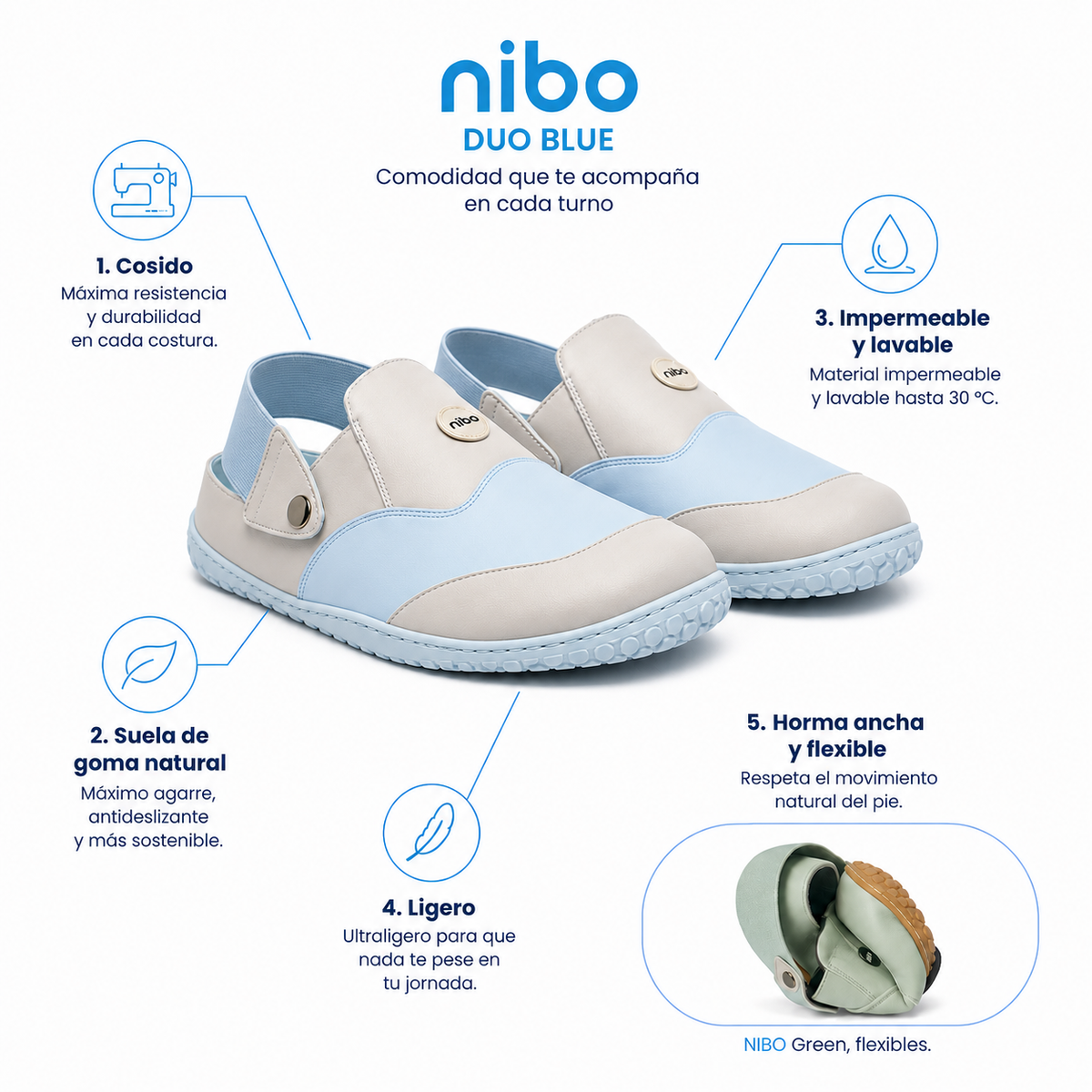
- Wide fit — gives your toes enough room to move naturally
- Flexible sole — better supports each step and encourages natural foot movement
- Lightweight — reduces repetitive effort when walking
- Resistant, easy-to-clean materials — better suited to the demands of a healthcare environment
- Good grip — provides greater safety on surfaces where liquids may be present
Investing in good healthcare clogs is investing in your wellbeing
Choosing the right nurse clogs won't eliminate the effort a healthcare shift demands. Long on-call hours and intense shifts will still be part of the job.
However, it can help make that experience more comfortable and help your body cope better with the hours of work. Just as no one questions the importance of a good mattress for rest or an ergonomic chair for office work, nursing clogs deserve a prominent place in any conversation about occupational wellbeing.
A small change you make every single day
Your uniform, stethoscope and gloves are all part of any healthcare professional's daily routine. So are your nurse clogs.
The difference is that they accompany every step from the moment your shift starts to the moment it ends. So taking the time to choose them well isn't a luxury — it's a decision that can make a real difference to your daily comfort.
At NIBO we've designed a different kind of barefoot clog for healthcare professionals: lightweight, flexible, wide-fit, made from washable materials and built on a philosophy that respects the natural movement of your foot.
Because the best time to take care of your feet isn't when the shift is over. It's before it begins.