What are barefoot clogs?
You leave the hospital after a long shift. You have walked from one place to another, stood for hours, rushed when you had to rush, and kept going far longer than seemed possible at the start of the day.
And then something very common happens: you do not think about dinner, going out or making plans. You only think about taking your shoes off.
That is where the question begins: what if the problem was not only the hours you spend on your feet, but also the footwear you wear during all those hours?
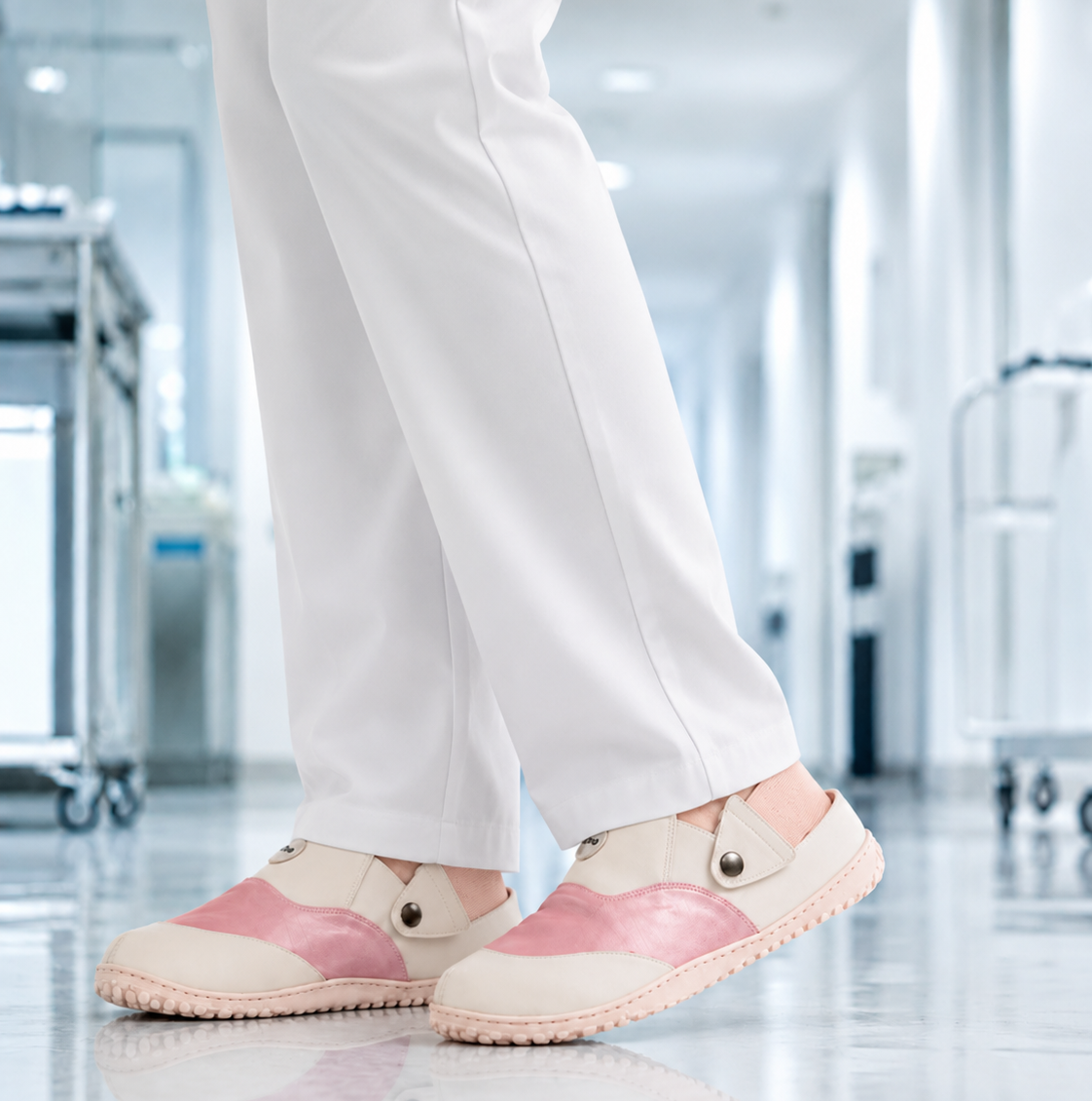
Barefoot clogs are born from that idea. They are a new way of understanding professional footwear: clogs designed to give the foot more space, allow more movement and support a more natural stride throughout the working day.
They are not the usual clogs.
For years, medical and professional clogs have been a practical solution for hospitals, clinics, laboratories, care homes and other jobs where people walk a lot. They are easy to put on, easy to clean and functional. But many traditional clogs are also rigid, narrow or too hard to properly follow the movement of the foot during a long shift.
Barefoot clogs, also known as foot-friendly clogs, aim to do the opposite: more space, more flexibility and a more natural way of walking.
What barefoot means in professional clogs
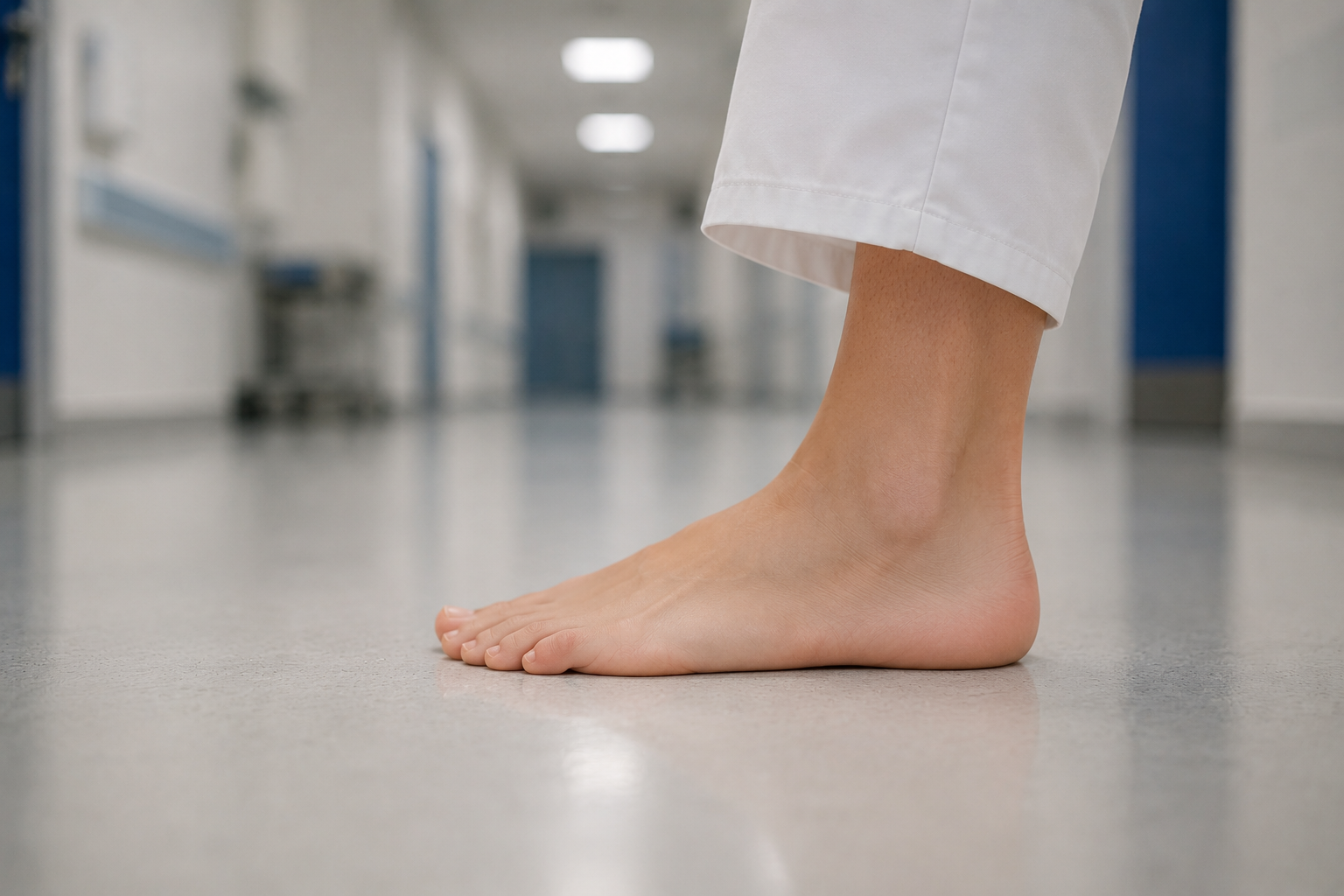
Barefoot means “without shoes”, but wearing barefoot clogs does not mean going barefoot. It refers to footwear inspired by the natural shape of the foot and the way the body moves when walking.
A barefoot clog for work is designed to protect the foot without locking it in. The idea is not for the foot to adapt to a rigid shoe shape, but for the footwear to move with the foot.
That is why, when we talk about barefoot clogs, we usually mean footwear with three main features: a wide fit, zero drop and a flexible sole.
Wide fit: more room for your toes
One of the most important differences between barefoot clogs and traditional clogs is the wide fit.
The fit refers to the internal shape of the shoe. In many conventional models, the front part is narrow and the toes end up compressed. This can become especially uncomfortable when you spend many hours standing or walking throughout your shift.
Barefoot clogs have a wider toe box so your toes have more room. This creates a freer, more natural feeling, especially during long working days.
At NIBO, the wide fit is one of the foundations of our design. Because if your feet spend many hours working, they need space to move.
Zero drop: a more natural foot position
Another key feature of barefoot clogs is zero drop.
Drop is the difference in height between the heel and the front of the foot. Many shoes slightly raise the heel, even when it is not obvious. In zero-drop footwear, the foot stays flatter, in a more natural position.
This does not mean that every foot should adapt in the same way from day one. If you come from very rigid footwear or shoes with a raised heel, a gradual transition may be recommended. That is why NIBO comes with an anatomical insole. But zero drop is one of the features that defines barefoot footwear and sets it apart from many conventional professional clogs.
Flexible sole: movement in every step
Barefoot clogs are also recognised by their flexible sole.
In many traditional clogs, the sole is rigid and the foot has to adapt to the shoe. A flexible sole, on the other hand, allows the foot to participate more in the movement. It does not block the stride as much and follows each step more naturally.
When you are standing or moving, your body is constantly adjusting its balance. A rigid sole can force this position and may make the body hold unnatural postures for longer.
For healthcare professionals, laboratory technicians, vets, physiotherapists, pharmacists or anyone who works on their feet, this flexibility can make a real difference in how comfortable they feel throughout the day.
At NIBO, the flexible sole is one of the elements that makes the shoe feel different from the very first shift.
Barefoot clogs for healthcare professionals and people who work on their feet
Barefoot clogs make particular sense for professionals who spend many hours standing. Not only in hospitals, but also in clinics, care homes, laboratories, consultations, pharmacies, veterinary centres, hair salons, beauty salons, retail environments or any workplace where the body feels the impact of the day.
The problem with tired feet and legs at work is that it does not always end when the shift ends. Many times, you leave the hospital or your workplace without the energy to enjoy the rest of the day.
That is why we designed NIBO as professional footwear inspired by barefoot principles: so that your feet are not the first thing you think about when your shift is over.
Are barefoot clogs comfortable?
Comfort depends on each foot, each body and each habit. But barefoot clogs are designed precisely to offer a freer feeling than many rigid clogs.
The combination of a wide fit, flexible sole, lightness and zero drop can help the foot move in a more natural way. In the case of NIBO, each pair also includes two insoles so you can choose the feeling that best suits you.
The anatomical insole can be a good option if it is your first time wearing foot-friendly footwear or if you want more support. The barefoot insole offers a more natural and direct feeling for those who are already used to it or are looking for a freer stride.
Are barefoot clogs for everyone?
Every foot is different. Some people adapt very quickly to barefoot footwear, while others need more time. If you have never worn barefoot or foot-friendly shoes before, it is normal for them to feel different at first.
That is why it is important to listen to your body and make a gradual transition if you need to. It is also advisable to consult a professional if you have persistent pain, an injury or a specific condition.
At NIBO, we have designed our clogs to adapt to different needs: they have a wide fit, two insoles included and enough space to use your own orthopaedic insoles if you need them.
Differences between barefoot clogs and traditional clogs
The main difference lies in how they understand the foot.
Traditional clogs tend to prioritise protection, cleanliness and practicality. Barefoot clogs aim to keep those advantages, while adding more freedom of movement.
A barefoot clog has more space for the toes, a more flexible sole and a structure that is more respectful of the natural shape of the foot. A traditional clog, by contrast, may be more rigid, narrower or less adaptable to movement.
That is why, if you are looking for comfortable clogs for working many hours on your feet, barefoot clogs can be an interesting alternative.
NIBO: barefoot clogs that do not feel like the usual clogs
NIBO was created to bring together comfort, design and functionality in a different kind of professional footwear. They are not the usual clogs.
They are flexible, lightweight, washable clogs designed for people who spend many hours on their feet. They have a wide fit, zero drop, a non-slip sole, two insoles included and a design that does not give up colour or personality.
Because you need your feet to work. But you also need them to live everything that comes after.
Discover NIBO and choose the model that moves with you.
Frequently asked questions about barefoot clogs
What are barefoot clogs?
Barefoot clogs are clogs inspired by barefoot or foot-friendly footwear. They are designed to allow a more natural stride, with a wide fit, zero drop and a flexible sole.
Are barefoot clogs suitable for work?
Yes, as long as they are designed for professional use. In the case of NIBO, they are clogs made for people who work many hours on their feet and need comfort, flexibility, easy cleaning and stability.
What is the difference between barefoot clogs and regular clogs?
Barefoot clogs offer more space for the toes, a more flexible sole and a more natural foot position. Traditional clogs are usually more rigid or narrow.
Can I wear barefoot clogs if I have never worn barefoot shoes before?
Yes, but a gradual transition may be recommended. At NIBO, we include two insoles so you can choose between a more anatomical feeling or a more barefoot feeling.
Are barefoot clogs suitable for healthcare professionals?
Yes. Barefoot clogs can be a good option for healthcare professionals and other people who spend many hours on their feet, as long as they are washable, stable, non-slip and functional for the work environment.