¿Un zapato es cómodo solo porque es blando?
Cuando pensamos en un calzado cómodo, la primera imagen que suele venir a la cabeza es la de un zapato o un zueco con una suela gruesa y muy acolchada. Durante años hemos asociado la comodidad a la cantidad de amortiguación, como si cuanto más blando fuera el calzado, mayor protección ofreciera a nuestros pies. Sin embargo, la evidencia científica demuestra que la comodidad es un concepto mucho más complejo.
Una revisión científica publicada en Safety and Health at Work concluye que el calzado es una intervención eficaz para mejorar el confort del pie en trabajadores que permanecen muchas horas de pie. El estudio señala que el confort no depende únicamente de la amortiguación, sino del equilibrio entre distintos factores como el ajuste, la estabilidad, la flexibilidad, el soporte y la distribución de las presiones plantares. En otras palabras, un zapato o un zueco muy blando no tiene por qué ser el más cómodo ni el más adecuado para una jornada laboral prolongada.
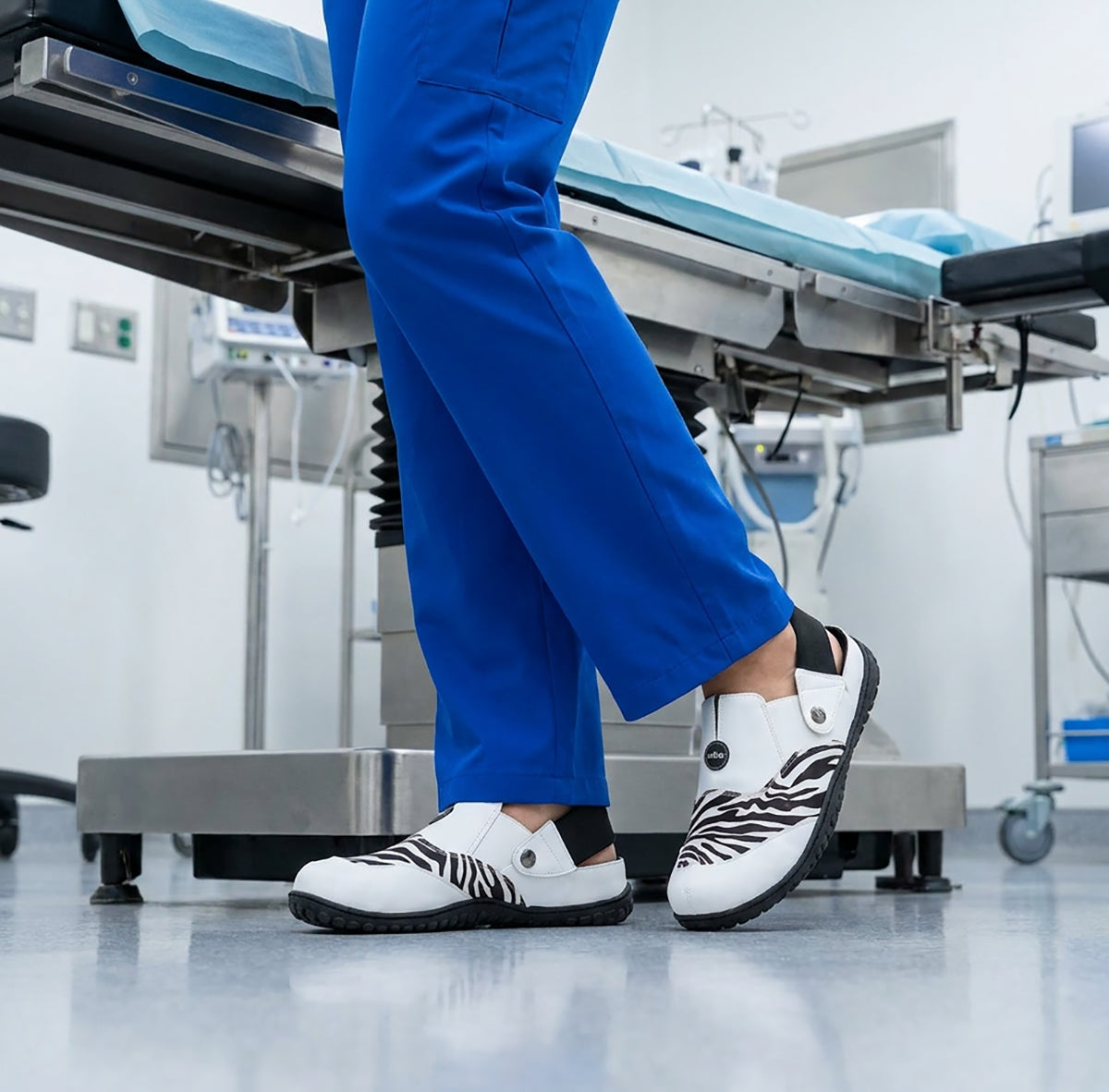
Esta conclusión resulta especialmente relevante para profesionales como enfermeras, médicos, técnicos sanitarios o farmacéuticos, que pueden pasar entre ocho y doce horas de pie. En estos casos, el calzado no solo debe proteger frente a los riesgos propios del entorno sanitario, sino también favorecer una pisada estable y permitir que el pie se mueva de la forma más natural posible durante toda la jornada.
La investigación también recuerda que la comodidad es una percepción subjetiva. La forma del pie, la manera de caminar, el tipo de superficie sobre la que se trabaja o el tiempo que se permanece de pie hacen que una misma persona pueda experimentar sensaciones muy diferentes con un mismo modelo de zapato o zueco. Por eso, elegir un calzado profesional no debería basarse únicamente en la primera impresión al probárselo, sino en cómo responde el cuerpo después de varias horas de uso.
Muchas personas consideran normal terminar el turno con los pies cansados, molestias en la planta, sensación de piernas pesadas o necesidad de quitarse el calzado nada más llegar a casa. Sin embargo, estas señales pueden indicar que el cuerpo está compensando un calzado que no se adapta correctamente a su biomecánica. Con el tiempo, esas compensaciones pueden trasladarse a tobillos, rodillas, caderas o espalda, afectando al bienestar general durante la jornada.
En el ámbito sanitario, donde el calzado debe cumplir requisitos de higiene, seguridad y resistencia, el reto consiste en encontrar el equilibrio entre protección y libertad de movimiento. Cada vez existe más consenso en que la comodidad no depende de añadir más material bajo el pie, sino de diseñar un zapato o un zueco que permita trabajar al pie de la forma para la que está preparado, sin renunciar a la estabilidad y a la seguridad que exige el entorno profesional.
Quizá la mejor forma de saber si un calzado es realmente cómodo no sea preguntarse cómo se siente al ponérselo, sino cómo se siente el cuerpo al terminar la jornada. Porque la verdadera comodidad no debería medirse por la cantidad de acolchado, sino por la capacidad del calzado para acompañar el movimiento natural del pie durante todo el día.